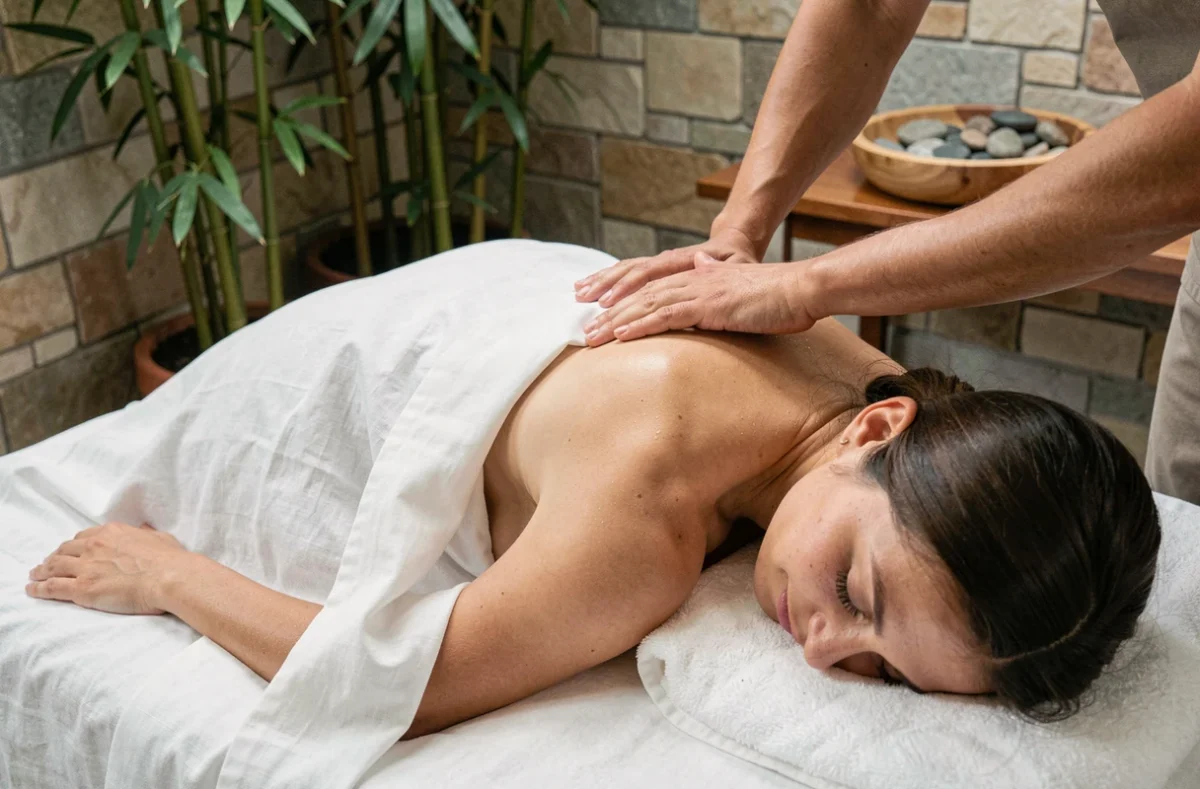
Have you ever noticed that your shoulders rise on their own when the day speeds up? This tension that settles between the neck and shoulder blades reflects a physical response to stress. Wellness massage works on this bodily mechanism to restore a lasting state of calm. Far from just a pleasant moment, a regular session changes the way the body manages daily pressure.
What recent research really says about massage and stress
Competitors often repeat that massage automatically lowers cortisol levels. The reality is more nuanced. A meta-analysis published in 2024, encompassing 137 studies and 12,966 participants on touch interventions, provides useful insights.
The most consistent benefits relate to subjective symptoms of stress, anxiety, and pain. In other words, people who receive massages reliably feel better. However, the measurable decrease in salivary cortisol after massage is not systematic depending on the protocols used.
Specifically, this means that wellness massage reduces your perception of stress and improves your overall feeling. It is a tool for regulating bodily experiences, not a guaranteed hormonal mechanism. This distinction matters: it allows for approaching sessions with realistic expectations, which enhances their perceived effectiveness.
Specialized practitioners offer approaches tailored to this work on daily tensions, as seen on https://lesmassagesdetiphaine.fr/ where different techniques are adapted to needs.
Wellness massage: how the body reacts during the session
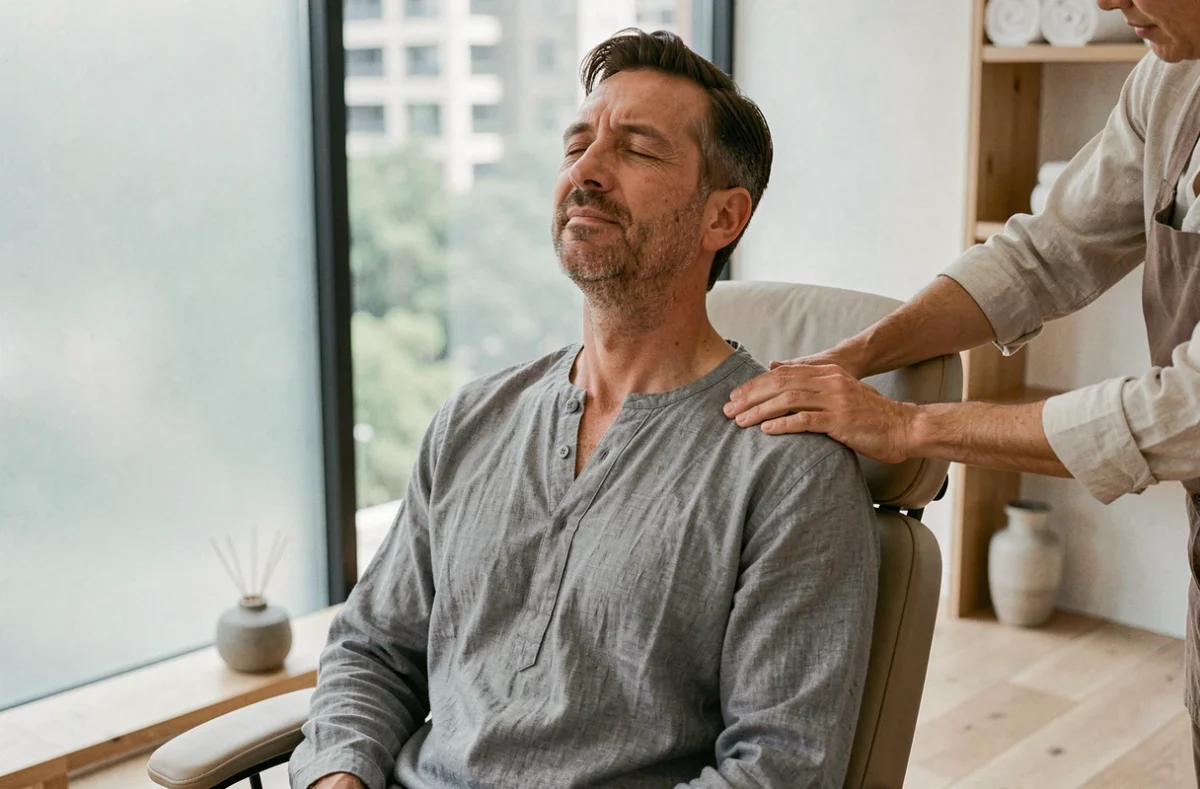
Firm touch on the muscles activates a simple mechanism. Mechanical pressure on the tissues stimulates the sensory receptors in the skin. These receptors send signals to the parasympathetic nervous system, which controls the slowing of the heart rate and muscle relaxation.
Imagine a dimmer switch. Stress turns the intensity up to maximum. The practitioner’s hands gradually turn the knob down. The result manifests through several measurable changes:
- Heart rate decreases, reducing the constant sense of urgency that stress maintains
- Muscles that have been tense for hours (trapezius, lower back, jaw) release their tension in successive stages
- Breathing naturally slows and becomes deeper, indicating that the nervous system shifts into recovery mode
These effects appear within the first few minutes of contact. The body does not need a full hour to start responding. A thirty-minute session is already enough to trigger this nervous shift.
The special role of oils and heat
The application of warm massage oil adds a sensory dimension to the mechanical work. Heat dilates the superficial blood vessels in the skin, facilitating local circulation. Techniques using hot stones, for example, combine pressure and thermal diffusion to reach deeper muscle layers.
This is not just a comfort detail. Heat reduces the resistance of muscle tissue, allowing the practitioner to work with less force while achieving a more complete release.
Choosing a wellness massage practitioner: the RNCP reference
You may encounter highly skilled practitioners as well as those who are insufficiently trained. An objective reference has recently emerged. Since December 21, 2023, the title of “wellness massage practitioner” has been registered in the National Directory of Professional Certifications (RNCP) under number 38447, at level 4 (equivalent to high school diploma).
This certification distinguishes a trained practitioner from someone without recognized credentials. It defines specific skill blocks, including one dedicated to the practice of massage. Before making an appointment, you can check if the practitioner mentions this certification or training recognized by the French Federation of Wellness Massage (FFMBE).
Concrete criteria for evaluating a practitioner
Beyond the diploma, several practical elements allow you to assess the seriousness of a professional:
- A preliminary interview before the first session, even brief, to identify your tension areas and any potential contraindications
- Adjusting the pressure during the session based on your feedback, without a rigid protocol applied to everyone
- A clear exercise framework, mentioning professional insurance and legal status
- The ability to explain the technique used in simple terms, without pseudo-medical jargon
A practitioner who talks about “energetic rebalancing of chakras” without ever mentioning muscles or the nervous system adopts a different approach than structured wellness massage. This is not a value judgment, but knowing the context you are in helps to formulate appropriate expectations.
Frequency and duration of massage sessions for stress
You have likely experienced this effect: after a session, the body remains relaxed for a few days, then tensions return. This is normal. Daily stress rebuilds contractions over hours of work, short nights, and static postures.
A monthly session constitutes a baseline rhythm for regular maintenance. During periods of high pressure (intense work load, difficult personal events), bringing sessions closer together to once every two weeks amplifies the effects.
The appropriate duration depends on what you are looking for. A short thirty-minute session targets a specific area (neck and shoulders, for example). A one-hour session allows for comprehensive work that includes the back, legs, and sometimes the face or scalp.
Sleep and massage: a direct link
One of the most documented effects of wellness massage concerns sleep quality. Accumulated muscle tension disrupts falling asleep because the body remains in a state of alertness. The relaxation achieved during the session extends into the evening.
People who incorporate massage into their routine report falling asleep faster and experiencing deeper sleep. Better sleep, in turn, reduces reactivity to stress the next day, creating a virtuous cycle.
Wellness massage does not replace medical follow-up or psychological care when stress becomes chronic. It integrates as a complementary bodily tool, with measurable effects on feelings and sleep. Checking the practitioner’s training, adjusting the frequency to your tension level, and observing changes over several sessions: these three points are enough to derive a concrete and lasting benefit from this practice.