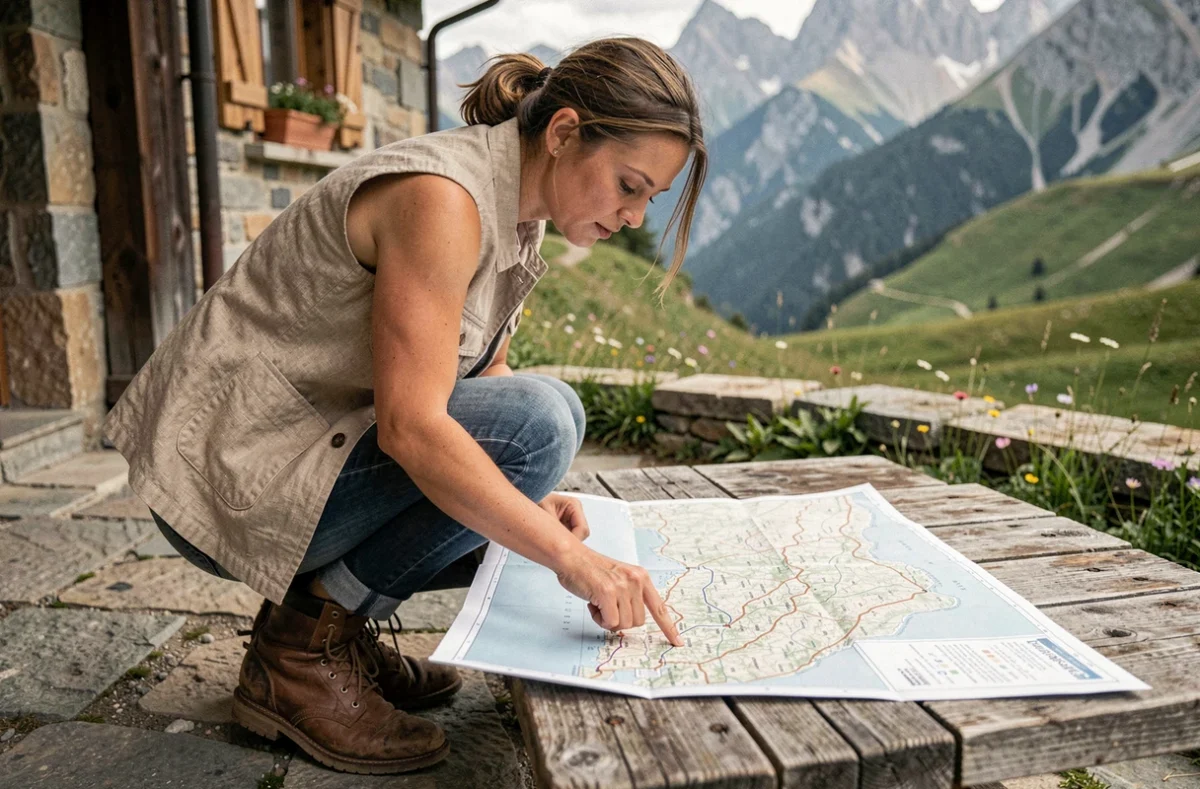
Planning a responsible getaway means solving a practical problem: the last mile. The train covers part of the journey, sometimes most of it, but the final destination is often beyond the rail network.
In its sustainable tourism strategy, the European Commission notes that rail operators are calling for better integration of cross-border journeys and ticketing, while also identifying coaches, buses and ferries as possible alternatives. This multimodal approach is precisely what sets thorough planning apart from simply advising people to “take the train.”
Multimodal travel: planning the last mile without a train
Most guides recommend taking the train instead of flying. This is sound advice for direct routes between major cities. It becomes inadequate as soon as the destination is in a rural, coastal or mountainous area, where regional train stations are far apart and connections are infrequent.
Combining trains, coaches and ferries reduces your carbon footprint without sacrificing accessibility. A journey from Paris to the Brittany coast might involve taking a high-speed train to Rennes, a regional train to a smaller station, then a regional coach. The total cost is often lower than renting a car for the same period, provided you check the timetables in advance.
Platforms that bring together rail, road and sea travel options for a single itinerary can help you compare these combinations. One useful resource to consult is https://www.voyagoo.fr. The goal is not to eliminate cars on principle, but to identify the stretches where a car really is the only option.
In France, Article 82 of the Climate and Resilience Act provides for restrictions on certain domestic air routes when a rail alternative meets the criteria set out in the legislation. Checking the exact scope of this provision before booking a domestic flight can help you avoid finding out too late that a route has been discontinued.

Overtourism and undertourism: choose your destination based on visitor flows
The European Commission distinguishes between two opposing phenomena: overtourism at popular tourist destinations and undertourism in regions that struggle to attract visitors. Traveling differently is therefore about more than changing how you get around. It starts with choosing the destination itself.
Shifting your trip by a few weeks can make a measurable difference. Mediterranean coastlines in June or September see only a fraction of the visitors they receive in August. Outside school holidays, Alpine valleys offer lower accommodation rates and trails you can enjoy without queuing.
How to identify a less-visited destination
- Check the density of accommodation listings on booking platforms: a limited hotel selection combined with positive reviews often points to an area that has so far escaped mass tourism.
- Consult regional tourism offices, which publish visitor numbers by season and site. These figures can help you avoid peak periods without giving up access to facilities.
- Prioritize destinations served by regional public transport (TER trains and departmental coach routes). This naturally rules out overcrowded sites accessible only by motorway.
Redistributing tourist flows benefits both travelers and local communities. Local businesses, independent accommodation providers and agricultural producers all benefit directly when visitor numbers are spread more evenly throughout the year.
Travel resilience: prepare for the unexpected, not just the ideal itinerary
The European sustainable tourism strategy identifies resilience in the face of geopolitical tensions, climate change and labor shortages as key challenges for the sector. For travelers, this perspective changes how they prepare.
Booking accommodation with flexible cancellation terms can sometimes cost a few euros more per night. That extra cost pays for itself as soon as something unexpected happens, such as a transport strike, severe weather or an administrative closure. Flexible booking terms are just as important as price and location when choosing accommodation.
Three habits for resilient trip planning
- Identify a backup transport option before you leave: if your regional train is canceled, which coach or carpooling service covers the same stretch? Having two options written down helps you avoid panicking on the day.
- Check local conditions—weather alerts, access restrictions in mountain areas and mountain road conditions—in the week before departure, not just when you book.
- Keep offline copies of transport timetables, your accommodation provider’s contact details and a map of the area. Mobile coverage in rural areas is still patchy.
We find that travelers who make these checks part of their planning routine do not spend any more time organizing their trips. They simply focus their attention differently: less on planning every minute of the itinerary and more on keeping their options open.

Responsible getaways: what the real budget includes
The cost of traveling differently is not just the price of a train ticket. The real budget includes travel time, connections and any extra accommodation that a multimodal itinerary may require. Ignoring these costs is like comparing a low-cost flight with a rail journey without factoring in the hotel night required for an early-morning connection.
When an overnight train is available, it covers both transport and a night’s accommodation. It is an underrated option for destinations more than six hours away by daytime train. European night train services are expanding, but coverage remains limited, so check whether a route exists before building your itinerary around it.
Traveling differently also means accepting that some destinations cannot be reached responsibly without spending more time on the journey. Making travelers bear that cost entirely risks turning sustainable tourism into a privilege. Integrated fares—such as regional passes and combined train-and-coach tickets—remain the most effective way to make these journeys financially viable.
A responsible getaway is not about giving things up. It is a way of planning that gives the journey, the destination and flexibility as much consideration as the advertised price. Less-visited areas, off-peak seasons and multimodal travel offer a practical framework, provided you factor them in from the very first stage of planning.