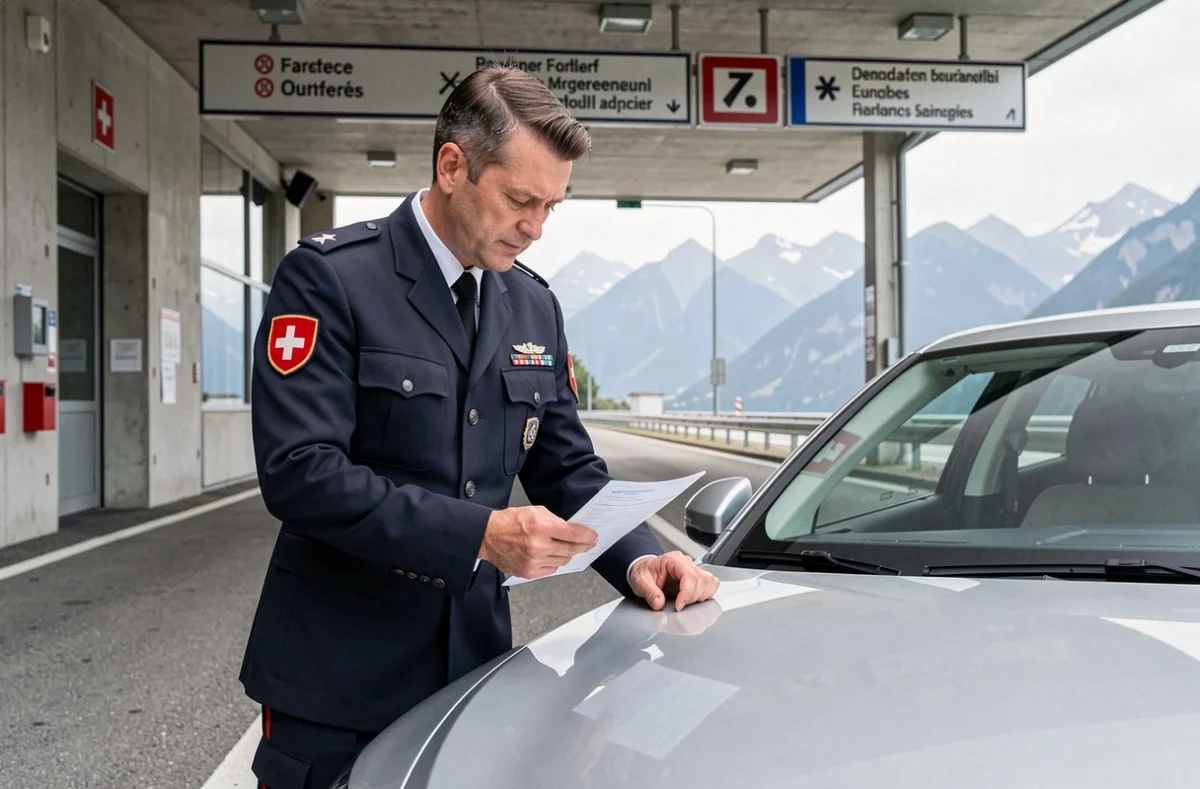
We buy a used sedan in Stuttgart, we pay the seller, and we think the hardest part is done. In reality, it’s at the Swiss border where the serious matters begin: customs declaration, taxes, cantonal technical inspection, possible CO₂ penalty. Each poorly anticipated step can block registration or inflate the bill by several hundred francs. Here’s how to approach the importation and approval of a car in Switzerland without unpleasant surprises.
CO₂ Penalty on an Imported Vehicle: The Extra Cost No One Budgets For
Most import guides detail customs duties and VAT, then stop there. An additional expense item is often overlooked: the CO₂ penalty applicable to individual imports.
The Federal Office of Energy specifies that a privately imported car may be subject to this penalty when its emissions exceed the target value. This mechanism, long perceived as reserved for large professional importers, also concerns individuals bringing in a vehicle for personal use.
Specifically, the more the engine emits CO₂ beyond the set threshold, the higher the financial penalty. For a powerful diesel SUV purchased in Germany or France, the bill can significantly alter the profitability calculation of the import. It is recommended to check the exact emissions of the model (European conformity certificate or manufacturer’s technical sheet) before signing anything, and to consult specialists like autowog.ch to estimate the actual total cost of the operation.
The trend is towards a gradual tightening. Swiss authorities note that the high proportion of electric vehicles has contributed to reducing the overall penalties for importers, which means, conversely, that high-emission thermal models are becoming proportionally more penalized.
Customs Clearance in Switzerland: Moving Exemption or Standard Taxation
Not all imported vehicles are treated the same by customs. There are two distinct regimes, and confusing the two can be costly.
Importation as Part of a Move
Swiss consular information indicates that cars and motorcycles can generally be imported duty-free as part of a move. The conditions are strict: one must prove personal use of the vehicle for a sufficient duration in the country of departure and adhere to a specific declaration timeline at the border.
This regime significantly reduces the bill, as standard customs duties are avoided. VAT remains due, but the savings on duties can represent substantial savings.
Purchase Abroad Without Moving
For a pure purchase (new or used vehicle acquired outside Switzerland without a change of residence), full taxation applies. This includes customs duties, Swiss VAT, and any potential CO₂ penalty. The vehicle must be spontaneously declared at a competent customs office, using the electronic declaration e-dec web, along with the purchase invoice and vehicle documents.
The documents to gather for customs clearance:
- Purchase invoice or sales contract mentioning the price, make, model, and chassis number
- Original foreign registration document (or equivalent title)
- European conformity certificate (COC) if the vehicle comes from the EU, also useful for approval
- ID and proof of residence in Switzerland
Cantonal Approval: Type Approval or Individual Examination
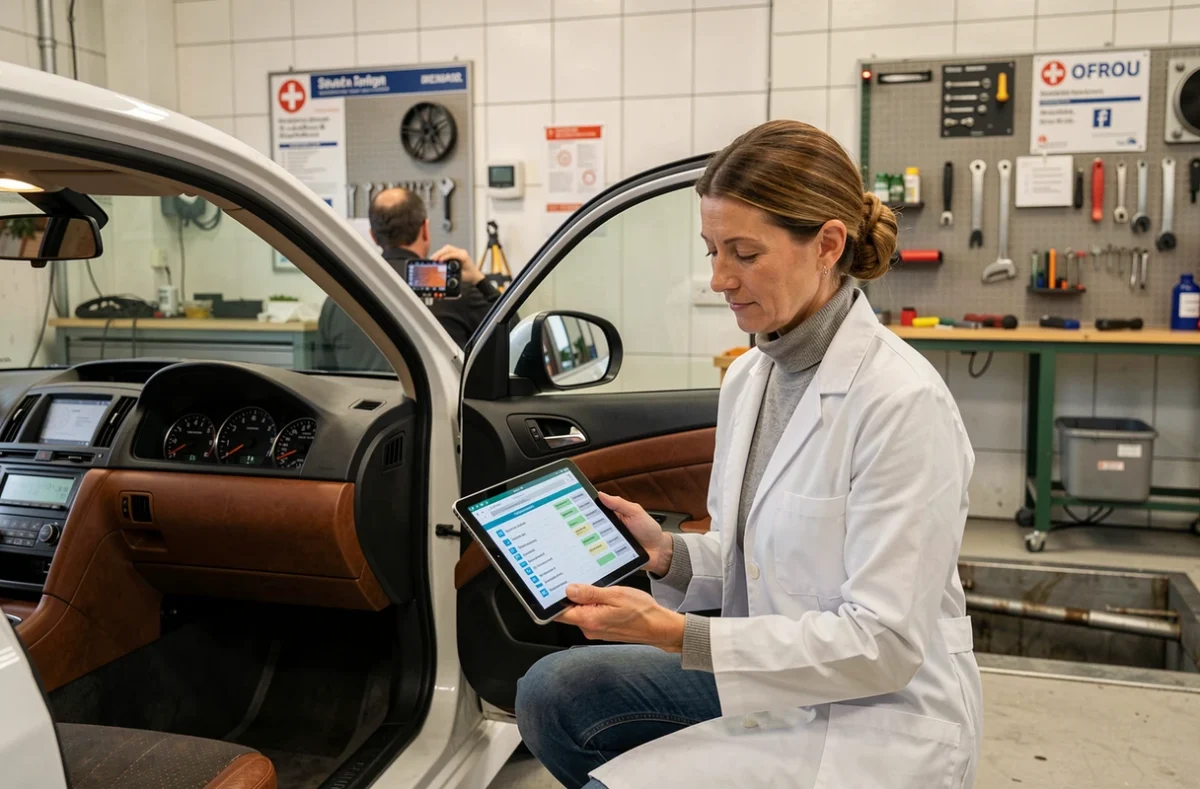
Once the vehicle is cleared through customs, it is still prohibited to drive with Swiss plates until approval has been granted by the cantonal automobile service. There are two paths available.
Type Approval
If the imported model corresponds to a type already approved in Switzerland (which is common for standard European brands), the procedure is relatively quick. The cantonal service checks the conformity between the presented vehicle and the existing approval sheet. This takes a few days in the least congested cantons, sometimes longer in Zurich or Geneva.
Individual Examination
For a vehicle not marketed in Switzerland (American, Japanese model, or limited series), an individual examination is mandatory. The inspection is much more thorough: lighting, pollution control system, noise level, compliance of the speedometer in km/h. Technical adjustments may be required before approval, such as replacing lights or adding a catalyst that meets Swiss standards.
Feedback varies on this point: some owners pass the individual examination without modifications, while others must invest in specific parts. It all depends on the gap between the standards of the country of origin and Swiss requirements.

Registration and Insurance: The Final Hurdles Before Driving
With approval in hand, there are two inseparable formalities to obtain license plates.
Liability insurance must be taken out before applying for registration. The cantonal service requires a valid Swiss insurance certificate. One cannot present a foreign contract, even temporary.
For the actual registration, the application is submitted to the automobile service of the canton of residence. Required documents include:
- The approval report (type approval or individual examination)
- The form 13.20A (customs control report)
- The Swiss liability insurance certificate
- The customs clearance proof (customs receipt)
The circulation permit and plates are issued once the application is validated and the cantonal fees are paid. Each canton sets its own rates for plates and permits.
One last point to keep in mind: temporary plates (transfer plates) allow driving the vehicle from the border to the inspection site, but their validity is limited. It is better to have completed the insurance procedures even before crossing the border, to avoid leaving the vehicle immobilized in a parking lot waiting for the paperwork.