
Organizing a wedding involves dozens of decisions over several months. The most common trap is not a lack of ideas, but the absence of a framework to prioritize them. Setting three solid benchmarks before diving in (legal timeline, realistic budget, venue constraints) is enough to defuse most tensions.
Legal timeline for civil marriage: the deadline that cannot be compressed
Before dreaming about decorations or playlists, check a non-negotiable legal constraint. In France, only civil marriage produces a legal effect. The religious or symbolic ceremony does not replace it.
The publication of the banns must remain posted for ten days at the town hall. This deadline, non-negotiable, can push back a date if the file is submitted too late. For a summer wedding, it’s better to start several months in advance.
Are you in a binational couple? The paperwork gets more complicated. Depending on nationality, it may require a recent birth certificate, a translation by a sworn translator, a certificate of custom, or even an apostille. These formalities can sometimes take several weeks. Delaying them risks postponing the entire date. If you want to find everything about organizing with 123 Mariages, this type of administrative timeline is detailed there.

Wedding budget: prioritize rather than split equally
Many guides suggest breaking down the budget into fixed percentages (so much for the venue, so much for the caterer). This approach overlooks a simple point: your priorities are not those of an average couple.
A couple passionate about gastronomy will invest more in the caterer, even if it means reducing floral decoration. Another may prefer a high-end photographer and choose a simpler buffet. Conscious prioritization, item by item, effectively replaces the standard grid.
Three items to budget for first
- The reception venue, because it determines the number of guests, logistics, and often the end time of the evening
- The caterer, which often represents the heaviest item and whose quote directly depends on the number of guests
- The photographer or videographer, whose availability quickly diminishes on high-season weekends
Keep a margin for unexpected expenses. A suit needing alterations, an electrical extension to rent, a shuttle transfer that no one had planned: these small amounts add up quickly.
Venue constraints: what to check before signing
The choice of venue goes far beyond aesthetics. Two technical constraints often fly under the radar and can ruin the evening if discovered too late.
Sound limiters and municipal regulations
Some establishments impose a sound limiter that cuts off the music beyond a certain threshold. In rural areas, municipal regulations sometimes set an end time for the evening. Ask the question before signing the contract, not after booking the DJ.
Outdoor reception and weather risks
Planning an outdoor ceremony? The weather is not automatically covered by cancellation insurance. A weather guarantee is often a separate extension, with a trigger threshold, minimum duration, and reference station specified in the contract.
In practical terms, this means that a backup plan must be formalized with the venue, caterer, and structure rental (tent, marquee). Relying on a potential compensated postponement is rarely a reliable strategy.
Wedding vendor planning: the sequence that avoids blockages
Booking all vendors at once is tempting but not very effective. Some choices depend on other decisions already made.
- The venue first, as it determines capacity, schedules, and technical constraints
- The caterer next, since their offer adapts to the available kitchen on-site (or not)
- The photographer and DJ shortly thereafter, as their schedules fill up quickly on sought-after dates
- Decoration, florist, and stationery last, once the venue style is known
Every vendor contract deserves a thorough reading, especially the cancellation clauses, non-refundable deposits, and surcharges for extra hours. An oral exchange is not worth a signed amendment.
Guest list and accommodation logistics
Why establish the guest list so early? Because it determines the number of covers for the caterer, the size of the venue, and the volume of invitations to print. It also has a direct impact on accommodation: if many guests are coming from afar, reserving a block of rooms near the venue avoids transportation issues at the end of the evening.
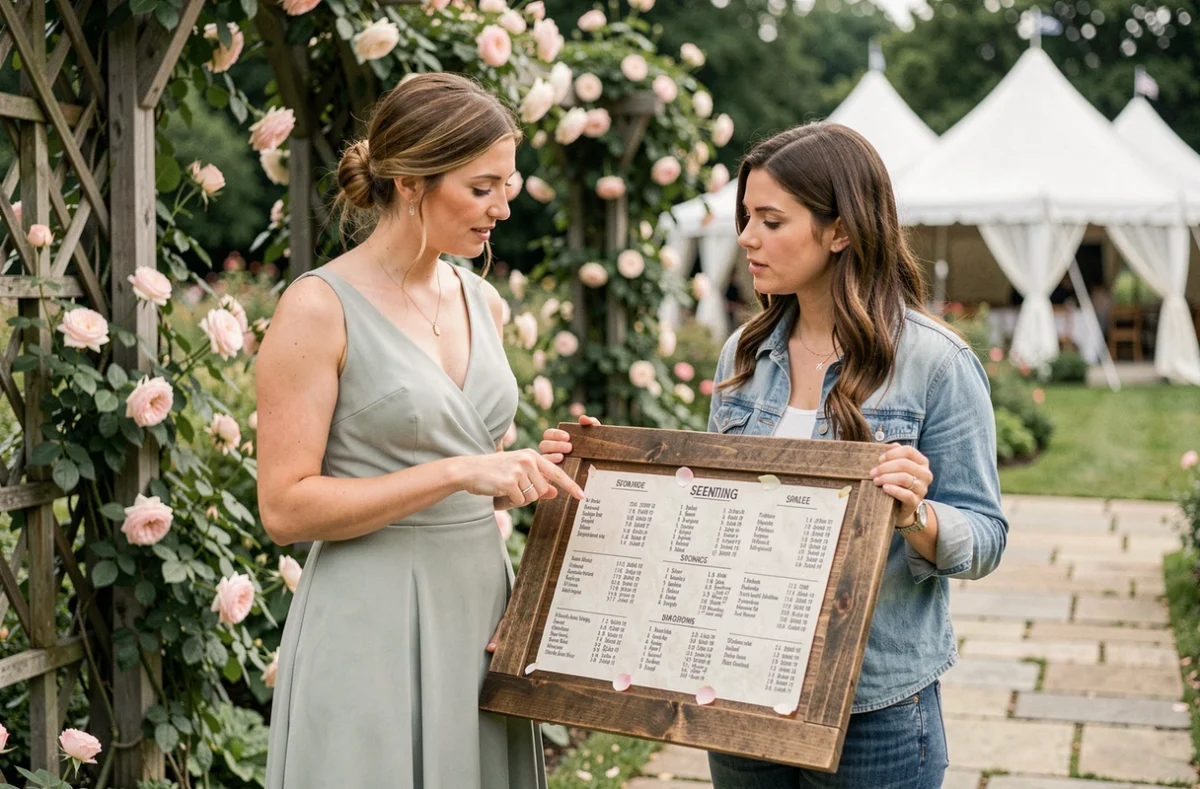
Send invitations early enough to gather confirmations and adjust the seating plan without rushing. A timeline of two to three months before the big day leaves a comfortable margin to follow up with the undecided.
The stress of preparations rarely comes from a lack of taste or imagination. It almost always arises from a deferred decision or a constraint discovered too late. Locking in the legal framework, setting a budget by priorities, reading each venue and vendor contract: these reflexes transform an anxiety-inducing marathon into a controlled project, week after week.