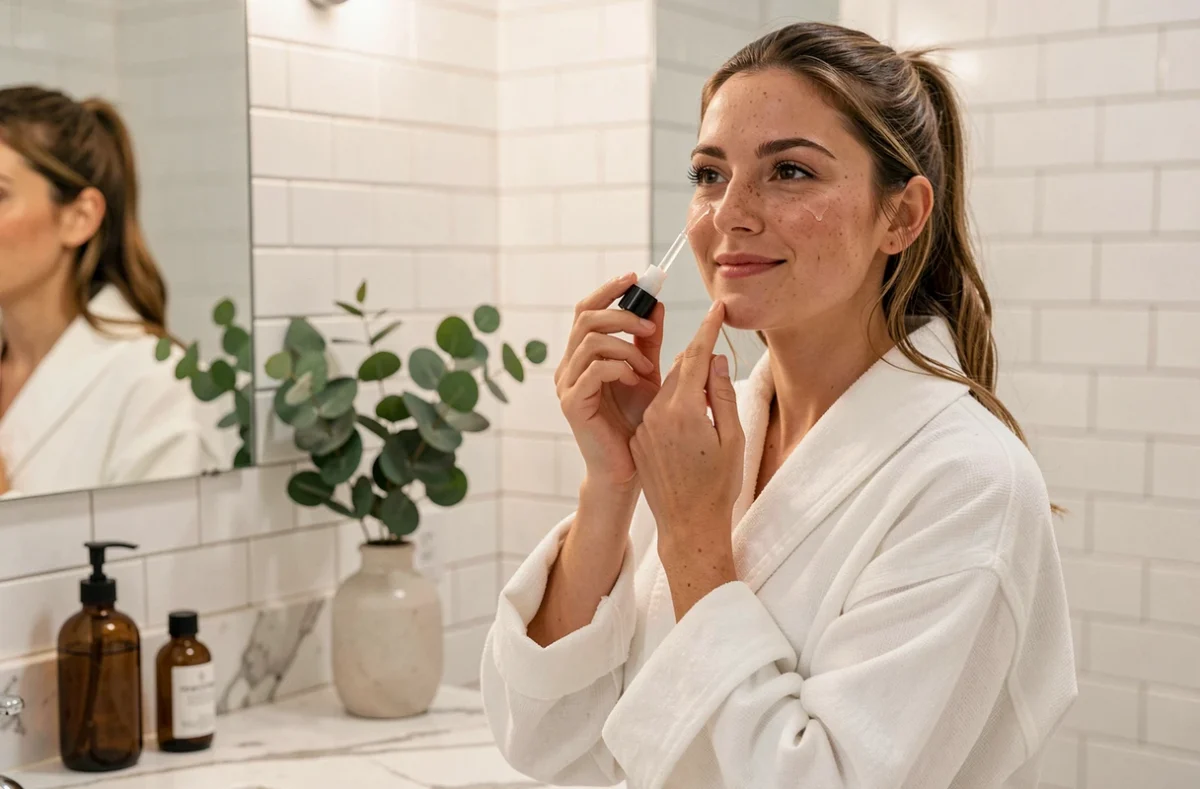
Natural beauty rests on a principle that is often misunderstood: it is not about giving up cosmetics, but about choosing actions and formulas that respect the physiology of the skin rather than masking it. This approach involves understanding a few basic biological mechanisms, discerning the ingredients, and adjusting one’s lifestyle habits.
Skin Barrier and Hydrolipid Film: Understand Before Acting
The skin produces a mixture of sebum and sweat on the surface called the hydrolipid film. This film acts as a shield: it limits water evaporation, slows down the penetration of pollutants, and maintains a slightly acidic pH that discourages certain bacteria.
Cleansing the skin too aggressively, for example with highly foaming sulfate surfactants, degrades this film. The skin then reacts by overproducing sebum or, conversely, by dehydrating. An effective natural beauty routine therefore begins with a gentle cleanse, suitable for the skin type, that preserves this barrier rather than stripping it away.
To delve deeper into this topic, the beauty secrets on Espace Forme et Beauté detail the mechanisms that underpin healthy skin on a daily basis.
Identifying your skin type (oily, dry, combination, sensitive) conditions the rest of the routine. A product that is too rich on combination skin causes shine, while a light lotion on dry skin will not be enough to compensate for water loss. The right product in the wrong place exacerbates the imbalance.

Natural Ingredients for the Face: Distinguishing Truth from Marketing
The word “natural” on a label does not guarantee effectiveness or tolerance. ANSES reminds us of precautionary recommendations regarding the use of significant oils, especially for pregnant women and children. A plant ingredient can irritate or sensitize the skin just as much as a synthetic component.
Vegetable Oils and Active Ingredients to Know
Some vegetable oils have lipid profiles similar to human sebum, which facilitates absorption. Jojoba oil, technically a liquid wax, regulates sebum production without clogging pores. Rosehip oil, rich in polyunsaturated fatty acids, supports skin regeneration.
- Jojoba oil is suitable for combination to oily skin: its structure similar to sebum “tricks” the skin into reducing its own lipid production.
- Aloe vera soothes and hydrates the surface thanks to its polysaccharides but does not replace an occlusive treatment in cases of marked dryness.
- Shea butter, very rich, forms a protective film suitable for dry skin and exposed areas (hands, lips, elbows) during cold months.
Claims to Check on Labels
Regulation (EU) 2023/2055 governs the presence of microplastics in cosmetics, but transitional periods vary by product category. A rinse-off cosmetic and a leave-on cosmetic are not subject to the same ban timeline. Reading the INCI list remains the most reliable action to spot synthetic polymers in a formula.
Be wary of vague environmental claims as well. A product labeled “clean” or “green” without recognized certification often falls into greenwashing. Labels like Cosmos Organic or Ecocert impose verifiable specifications, unlike self-proclaimed terms.

Natural Beauty Routine: Morning and Evening Actions
Building a routine does not mean piling on products. Three to four actions are enough for balanced skin: cleanse, hydrate, protect in the morning (with a product containing a sun filter), and cleanse then nourish in the evening.
Double cleansing, popularized by Korean rituals, has a concrete benefit for those who wear sunscreen or makeup. An oily product (oil or balm) first dissolves lipophilic residues, then a gentle water-based cleanser removes the rest. On bare skin without sunscreen, a single cleanse is sufficient.
Body and Hair Care
The scalp follows the same principles as the facial skin. A shampoo that is too stripping dries out the hair fiber and stimulates sebum production at the roots. Gentle surfactants (glucosides, betaines) cleanse without aggression.
For the body, hydration after showering, on slightly damp skin, optimizes the absorption of actives and strengthens the protective film. A light lotion in summer, a richer balm in winter: this seasonal adaptation makes a real difference in skin comfort.
Nutrition and Hydration: Beauty from Internal Sources
The skin partly reflects nutritional status. Essential fatty acids (omega-3 and omega-6), found in fatty fish, nuts, and certain vegetable oils, contribute to the flexibility and integrity of the cell membrane. A deficiency often translates to dull, dry skin or skin prone to inflammation.
Dietary antioxidants (vitamin C in citrus fruits and peppers, vitamin E in almonds and avocados, polyphenols in green tea) help limit oxidative stress caused by UV and pollution. No supplement can replace a varied plate, but a diet rich in colorful plant foods supports cellular regeneration in a measurable way.
Internal hydration also plays a role. Dehydrated skin loses elasticity and radiance. Drinking regularly throughout the day, without waiting for thirst, maintains a hydration level favorable to epidermal renewal.

Sleep and Stress Management: Two Underestimated Levers for the Skin
During deep sleep, collagen production accelerates and cutaneous microcirculation increases. Chronic sleep deprivation slows these processes, manifesting as a dull complexion, pronounced dark circles, and slower healing.
Chronic stress raises cortisol levels, a hormone that stimulates sebum production and promotes inflammatory outbreaks (acne, eczema, rosacea). Incorporating regular physical activity or relaxation techniques is not a trivial piece of advice: it is a direct physiological lever on skin quality.
Ultimately, natural beauty relies less on the latest trendy serum than on the coherence between what the skin receives on the surface, what the body absorbs through food, and the quality of rest. Adjusting these three parameters yields more lasting results than an isolated miracle product.