The transportation of goods between France and England is a crucial issue for the economies of both countries. Various infrastructures are in place to facilitate these exchanges. This article explores the main infrastructures used for the transportation of goods between these two nations, focusing on their operation and importance.
The Channel Tunnel
The Channel Tunnel, also known as the Eurotunnel, is one of the most emblematic and innovative infrastructures for the transportation of goods between France and England. This rail tunnel connects Folkestone in England to Coquelles near Calais in France. It is used by freight trains and shuttles transporting trucks and cars.
The Channel Tunnel offers a fast and efficient solution for the transportation of goods. Freight trains can carry a wide variety of products, from food items to construction materials. Additionally, the shuttles allow trucks to quickly cross the Channel, thus reducing travel times and logistics costs. This infrastructure plays a key role in maintaining supply chains between the two countries.
Maritime Ports
Maritime ports constitute another essential infrastructure for the transportation of goods between France and England. The main French ports involved in these exchanges are Calais, Dunkirk, and Le Havre. On the English side, the ports of Dover, Felixstowe, and Southampton are among the most used.
Maritime ports enable the transportation of large quantities of goods by sea. Ferries and cargo ships provide regular connections between the different ports, thus facilitating international trade. The ports are equipped with specialized terminals for loading and unloading containers, optimizing the efficiency of operations. These port infrastructures are vital for the transportation of heavy and bulky goods.
Road Infrastructures
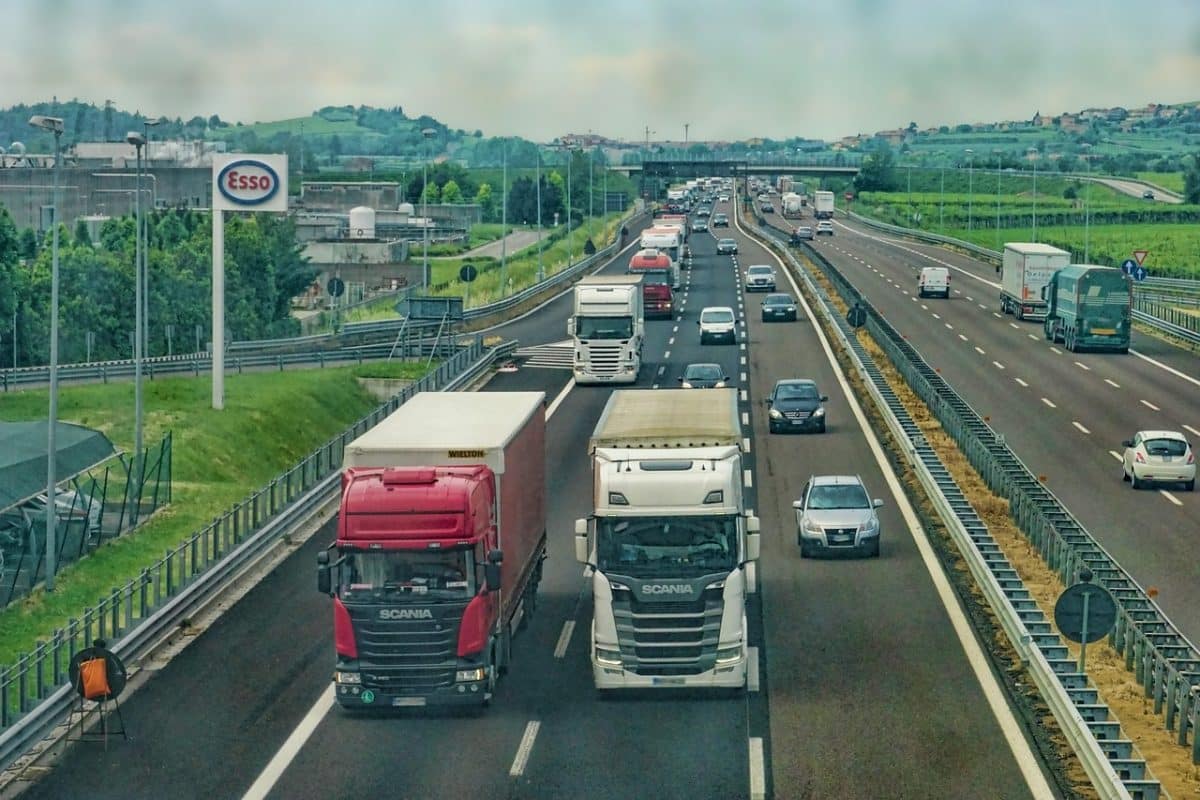
Road infrastructures also play a crucial role in international transport to England. Highways and national roads allow trucks to transport goods to ports and rail terminals. In France, the A16 motorway connects Paris to Calais, thus facilitating access to the Channel Tunnel and maritime ports. In England, the M20 motorway connects London to Folkestone, providing direct access to the Channel Tunnel.
Road infrastructures are regularly maintained and modernized to ensure safe and efficient transport conditions. Rest areas and service stations are strategically located along the roads to provide services to truck drivers. Furthermore, traffic management systems and electronic toll technologies help to smooth traffic flow and reduce waiting times at crossing points.
Rail Infrastructures
Rail infrastructures, beyond the Channel Tunnel, are also essential for the transportation of goods between France and England. The rail networks of both countries are interconnected, allowing for the direct transport of goods by train. In France, the rail network is managed by SNCF, while in England, Network Rail is responsible for the rail infrastructure.
Freight trains offer an eco-friendly and efficient alternative to road transport. They enable the transportation of large quantities of goods over long distances with a reduced carbon footprint. Rail infrastructures include sorting yards, freight terminals, and lines dedicated to the transport of goods. These infrastructures are regularly modernized to improve the capacity and reliability of the network.