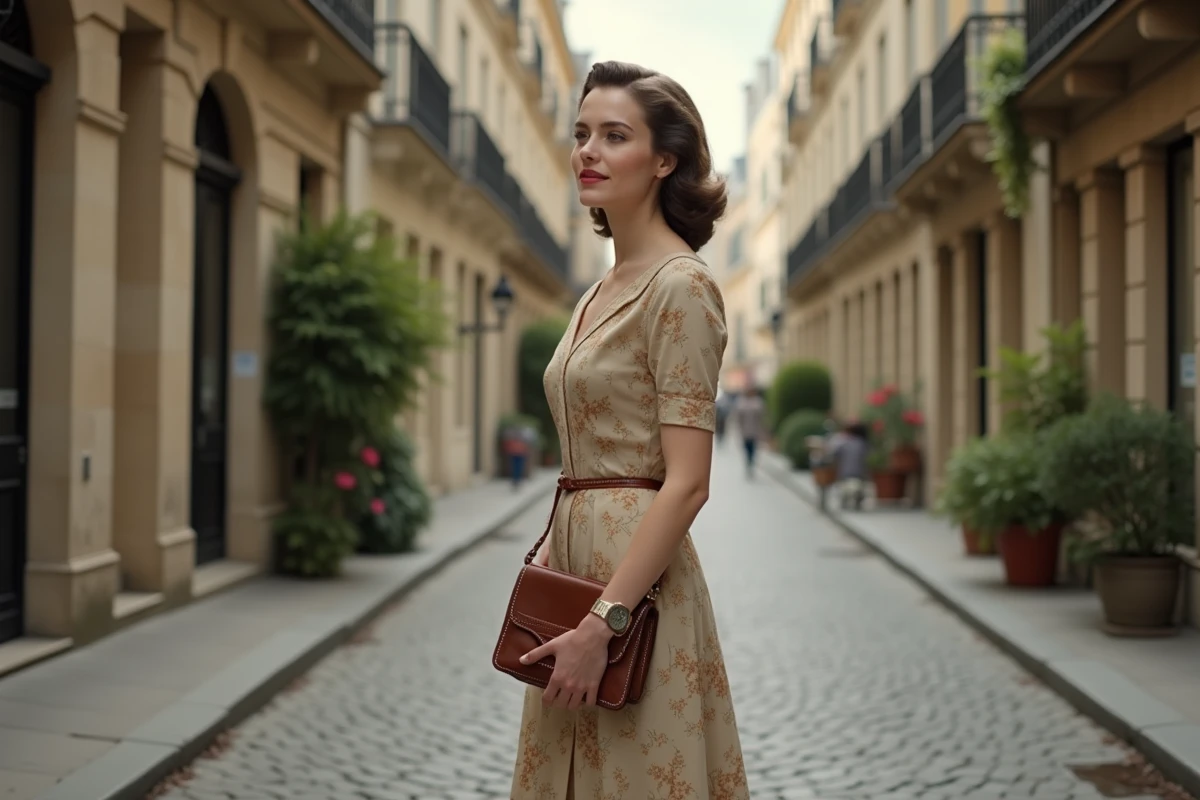
In 1942, the American War Production Board imposed strict restrictions on the amount of fabric allocated for clothing production. Despite rationing, the fashion creations of this decade continue to inspire generations of designers. The adaptations forced by the shortage of raw materials resulted in shapes and silhouettes that are instantly recognizable. The echo of these constraints still resonates today in the contemporary fashion industry.
Why the fashion of the 1940s still fascinates today
The influence of 1940s fashion does not fade; on the contrary. This decade marks a transition where inventiveness stems directly from difficulties. Under the pressure of rationing, creativity expresses itself without ostentation, favoring a thought-out elegance over the flamboyance of the Roaring Twenties. Cinched waists, mid-calf skirts, original shoulders: each cut seems to pay homage to the silhouette without constraining it. Lauren Bacall, Katharine Hepburn, Ingrid Bergman: these icons illustrated a new affirmation through their magnetic presence, that of a clear-eyed and determined femininity.
The style of the vintage dress from the 40s combines apparent simplicity with subtle refinement. The famous Kitty Foyle shirt dress, recognizable by its contrasting collar and modest buttons, blends utility with aesthetics, while polka dots, small flowers, or stripes offer discreet bursts of boldness. Those who adopt these pieces today pay tribute to originality, quality, and attention to detail. More than a matter of nostalgia, this choice expresses a true stance: that of preferring craftsmanship and uniqueness over impersonal production.
Audrey Hepburn has never ceased to embody this aspect of fashion heritage. Her influence still haunts the imagination of current creators, testifying to the cultural weight of the 40s. To delve deeper into analyses of iconic dresses and trends from this era, you can consult Blogueur for vintage fashion.
Between constraints and creativity: how the war shaped the elegance of vintage dresses
The shock of World War II disrupted all the benchmarks of women’s wardrobes. Restrictions on fabrics accelerated the disappearance of embellishments. The shapes became rigorous without losing their appeal: short sleeves, fitted waists, skirts shortened out of necessity. Clothing borrowed masculine elements, featuring structured suits, assertive shoulders, and even men’s shirts tucked under a rustic wool coat. Even constrained, these stylistic choices did not stifle refinement; they gave it another, more direct form.
Specifically, several elements synthesize the creativity of this period:
- Norman Norell and Claire McCardell laid the foundations of American sportswear, with comfortable, adjustable clothing designed for everyday life without sacrificing sophistication.
- Dresses with defined waists, wide trousers, and flared skirts create a wardrobe where practicality and femininity balance each other.
- The arrival of alternative materials like rayon or acetate compensates for the lack of silk or wool.
- Mindful of every resource, each detail makes a difference: reuse of buttons, reinforced seams, hand-stitched embroidery.
- To break the rigidity, patterns and graphic prints, polka dots or stylized bouquets, brighten up simple fabrics.
In cinema, the unforgettable silhouette of Rita Hayworth in Gilda and the charisma of Lana Turner in The Postman Always Rings Twice illustrate this resilient elegance. Accessories set the tone: stylish hats, colorful scarves, and strappy shoes embellish everyday life. Makeup dares with red lips and a bold eyeliner stroke; hairstyles are carefully styled, with disciplined curls or impeccable victory rolls. Meanwhile, Coco Chanel revolutionizes the zeitgeist: dresses become understated, easy to wear, and the little black dress establishes itself as a symbol of lasting elegance.
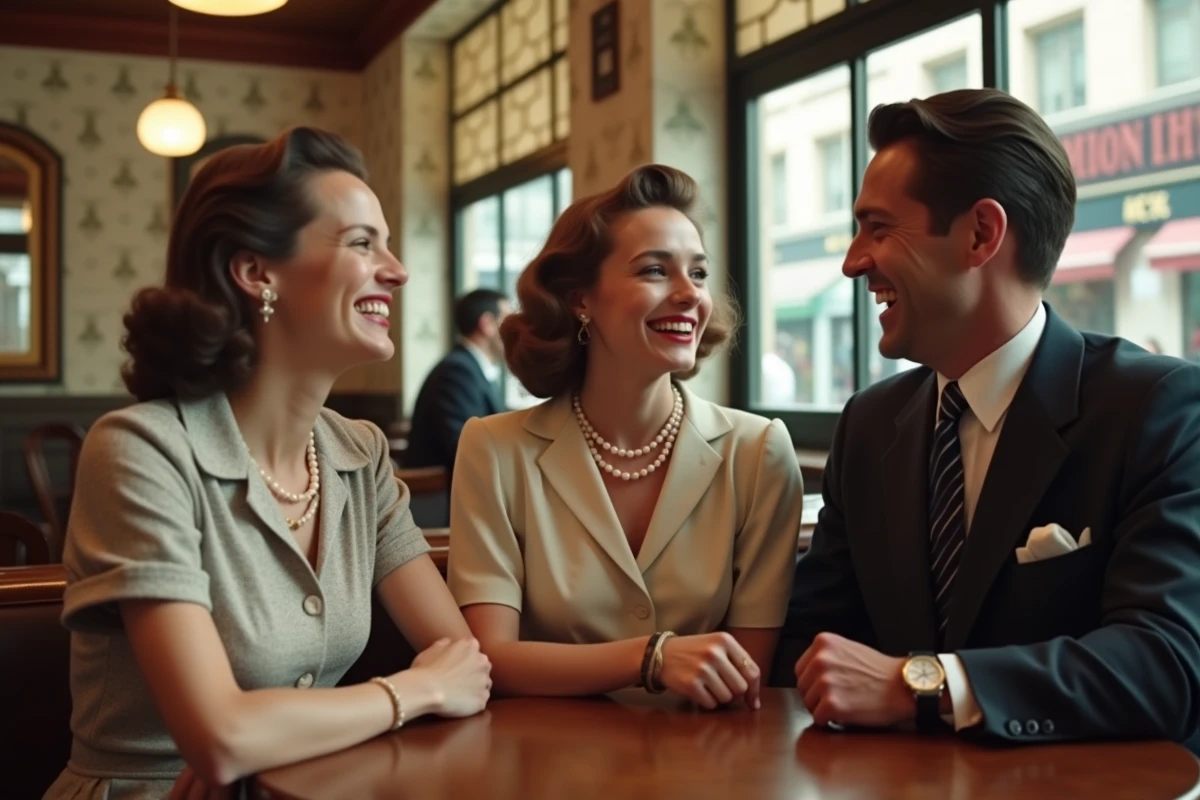
From current runways to retro boutiques, the legacy of the 1940s in contemporary fashion
The legacy of 1940s fashion is boldly displayed by today’s designers. On the runways, high waists, structured shoulders, and midi skirts recall the famous New Look launched by Dior in 1947. Saint Laurent and Givenchy each take their own approach to these references: one revisits the masculine-feminine suit, while the other multiplies wool layers and clean lines.
In the realm of contemporary houses, there is a visual signature stemming from this decade:
- Mugler plays with sculpted shoulders, combining theatricality and modernity.
- Schiaparelli reinvents draping, giving it an avant-garde flair.
- At Saint Laurent, elongated trench coats and high heels recreate the elegant and refined silhouette.
- Geometric patterns, mid-length skirts, and graphic accessories (gloves, glasses) have become essential.
But the allure of vintage dresses is not limited to the runways. In Paris, London, or New York, thrift stores and retro boutiques attract those who wish to wear a garment steeped in history. Wearing a dress from the 40s becomes a way to assert a quest for rarity, sustainability, and unique style. Among the racks, each piece tells the story of the seamstresses and the quiet strength of an era marked by resilience.
The vintage dress from the 1940s transcends time without gathering dust. It continues to assert itself, to surprise, and to inspire contemporary fashion with a desire for style, discreet boldness, and a path traced against ease.